Episode 86 · March 17, 2024
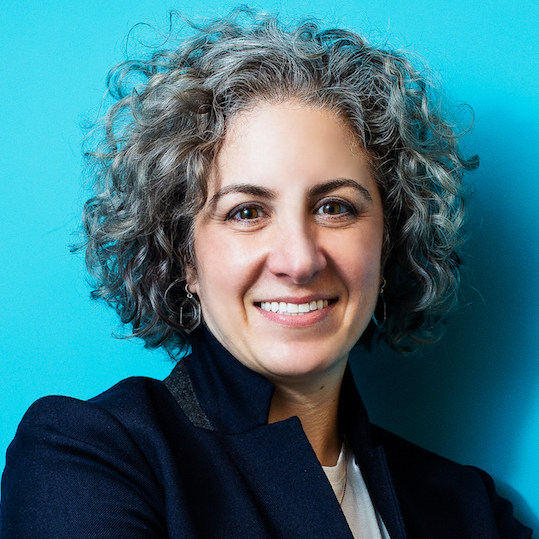
How to keep your luck from running out, with Meghan Goff
With Meghan Goff
Listen and subscribe
In this episode
I took my family to the Dominican Republic for a week and didn't bring my laptop, which I could do because of the women on my team who held the fort. That got me thinking about what it takes for a business to hold together without you standing over it. Meghan Goff started hers in January 2020, four months pregnant, with two small children, in a city she'd just moved to, and then doubled her income two years running. She came looking for help anyway, which surprises people, because nothing had gone wrong. We get into repricing every client at renewal, working out what she had to say on LinkedIn, and the number that came in half again over her goal.
What you'll take away
- Fix the roof when the sun is shining. She came for help after her best year, not after a bad one. By the time you're desperate it's late, because a B2B sale takes anywhere from three to eighteen months.
- Her retainers were quietly a bet that clients wouldn't use their hours. The work was good and nobody complained, and it still felt off to her. It also isn't a strategy: if they all used their hours at once, the profit would go.
- She repriced everyone at renewal, some at double. Her contracts came up on June 30 and she dreaded every one of those conversations. She was shocked at how little pushback came back.
- She stopped calling herself a writer. Consultant, strategic partner, somebody who can guide what you're trying to achieve. As she put it, nobody's going to buy it if you don't buy it yourself.
- A sick child and a lost tooth became her best-received posts. Empathy and what donors feel, and how you make a bit of magic for people. She stopped overthinking what she had to say.
In this conversation
The full transcript, in sections. Open any one to read it.
"What if this was a fluke? What if this was luck?"
0:02
I think when you start seeing these numbers that you never for me in a million years, thought were possible. I knew that it was the result of hard work and hustle and all of this, but I was like, what if this was like a fluke? What if this was luck? Or what if? What if I can't maintain, forget about growing. What if I can't even maintain what I built what then?
A week away with no laptop, and the women who made it possible
0:26
Welcome to the smart gets paid podcast with me. Leah Neaderthal, I help women land higher paying clients in their independent consulting businesses, but I've never been a salesperson. My background is in corporate marketing, and when I started my first consulting business, I learned pretty quickly that it's about 1000 times harder to sell your own stuff than it is to sell someone else's. So I taught myself how to do it, and I created the sales approach that I now share with my clients so they can feel more comfortable in the sales process, get more of the right clients and get paid way more for every client contract. So whether your client contracts are $5,000 $100,000 or more. If you want to work with more of the clients you love, do more of the work you love, and get paid more than you ever thought you could, then you're in the right place. Let's do it together. Thanks for tuning in, and don't forget to rate, review and share. Hey there, Leah here, and thanks for tuning in. I hope that wherever you're listening to this, wherever you are right now, you're having a good week, making some good progress on your business and taking some time for you. So a few weeks ago, my family and I went on a family vacation. It was me and my family, my parents, my sister and her family, and we spent a week in the Dominican Republic. This trip was a long time in the planning with all of us, and it was great. My kids had a blast with their cousins. We got so much good family time, and it was just a great trip all around and I think the big thing for me is that on this family vacation, or really trip, as people keep reminding me, like, if you're traveling with kids, it's not a vacation, it's a trip. So on this family trip, the big thing for me was that I was able to actually completely turn off, like I didn't even bring my laptop, which is huge for me, and I didn't respond to one email. And it was so nice just to truly disconnect and real talk. I mean, I could do that thanks to the incredible work of my team, who held down the fort, Shiley hakimian, our LinkedIn coach, and Sue Holloway, our copy coach, who stepped up in Slack, Cass Leroy, who kept the trains running behind the scenes, and even my client, Brandi Zimmerman, who stepped up to lead a coaching session in the program. So a huge thank you to each of these incredible women for allowing me to turn off on this vacation. And it's funny, you know, I was thinking back on the trip about how I used to think about traveling and taking time, you know, like I used to think that the beauty of having your own business was that you could work from anywhere. And when I ran my first consulting business, I did, I spent four years as a digital nomad. It was like, have laptop will travel, right? So I was working wherever I was, out of cities and towns and beaches all over in Central and South America, in Eastern Europe, I'm really all over. And of course, being able to work from anywhere was a huge benefit at the time, because before that, I had been in corporate, and I was, like, tied to my cubicle. But now that I've been running my business for a while, and especially over the last few years of the pandemic, when it's, you know, more common to work from home and really be able to work from anywhere. I've realized that I actually don't want to work from anywhere like that's not the luxury of running your own business for me anymore. The real luxury of running your own business for me is to go places and wherever you are, to be there, to be present, and not have to work at all and to really be able to turn off. And maybe you've had that perspective shift as well, you know, especially as the world changes and our working habits have changed, but that's what I'm grateful for now, and being able to work and also be present for the things that are important is also something you're going to hear in this conversation. All right, so let's dive into this episode. I'm so excited to share this conversation with you, with my client, Megan Goff, who's an impact copywriter for nonprofits. When Megan and I first started working together, things in her business were really good. They were great, actually. And so you might wonder, like, if things were so great, you know, why would she need a coach? And like, why would she do a program like this? Well, for two reasons, as you're going to hear. First, because as good as things were, she had this nagging fear that it might all end like she had been lucky up to this point, but her luck was going to run out. And if you're listening to this, I'm wondering if you've ever had that fear too, like sometimes it can be just this sort of duh. All fear in the background. Other times, that fear can wash over you from out of nowhere, but this fear that you got here through luck, and your luck might run out, and it just might all end. I've heard the same thing from so many women. So if you've had that fear, then you are not alone. But the second reason she knew she needed to do something different was because she knew that the way she had been working wasn't sustainable. So instead of just sort of hoping that something would work out or trying to muscle through on her own, and I mean, you're gonna hear her talk about this, but she's raising three young kids, and it's not like she had all this time to just, like, figure it out and piece it together on her own. So instead of doing that, she got help. And as you'll hear the things that she's been working on in her business, like her pricing, her client, strategy, her mindset, they've allowed her to not just maintain her business, but grow it and grow it without getting overworked. And even more than that, she has the confidence to continue to grow and expand. So in our conversation, you're going to hear how Megan raised her prices with current clients, how she got really clear on the best clients for her. You're going to hear her talk about the mindset shift that let her start showing up on LinkedIn. And you're going to hear the surprising things she didn't even know she needed, which really helped her grow the most. I cannot wait for you to hear Megan's journey. So take a listen to my conversation with Megan, and at the end, I'll come back and share a lesson that you can apply to your business, and then hopefully someday soon, you'll partner with us to help you build your consulting business and come back on the podcast and tell your story. Enjoy. So you might have noticed that with the economy being as it is, things feel a little shaky. Referrals are slowing down, budgets are getting cut, and clients who you thought would say yes, are saying no or not right now. And here's the thing, in this economy, you can't run your business by waiting for referrals. Clients just aren't going to swim into your net. You have to be intentional. That's why the best way to protect your business today and for the future is to have the two systems that every consulting business needs, a marketing system to bring the right clients to you and fill your pipeline, and a sales system to help clients say yes and get you paid more. But it's not just about getting clients. It's about security and stability and making your business sustainable no matter what's happening out there, smart women are doing this right now, even in this economy, they're winning their biggest contracts, filling their pipelines, and their businesses are growing, which lets them do things like build up six months of family savings a lot sooner than they had planned, or go from having one to two months of revenue booked to having eight to 10 months of revenue booked, or getting to the place where you're able to pick and choose your clients and say no to the ones that aren't perfect. These are real results from women in the academy, because this is what we do inside the Academy. We help you build the marketing and sales systems that make your business and your revenue more stable, more secure and more sustainable. So if you've been in business for at least two years, if you made at least 120k last year, and if you want your business to feel secure no matter what's happening in the economy, join us. Apply today. It's markets pay comm slash Academy. We get started on Monday, February 9, because you can't control the economy, but you can control what you do about it, Megan, I'm so excited to have you here. Thanks for being here. Yes. Absolutely So, Megan, why don't you tell for the listeners? Why don't you tell us what
you do? Yeah, absolutely so, my name is Megan Goff, and I am an impact storyteller and development communications consultant and founder of onward communications. So at onward communications, I help nonprofit organizations connect with their donors through human stories that drive engagement and inspire action, awesome.
So how long have you been How long have you been running your business?
Yes, so this is my fourth year of business.
Okay, amazing. So you did it through the covid years,
that is correct. I actually launched my business in January of 2020, oh
my gosh. Such high hopes. Yeah, absolutely. I feel like we all started that year being like, this is great, and then it wasn't great, right? Let's rewind a little bit. Megan, how would you describe what was going on in the business when you came into this markets paid orbit like what were, what was, what was going on.
Why she went looking for help after her best year ever
9:33
So I joined the academy in March of 2023 and honestly, this might sound counterintuitive to some people, but I was coming off of my most successful year of business ever in 2022 but you know, I was seeking guidance and help to grow and sustain my business. And I think to understand a little bit about why I was looking for help, it's important to understand. How I got there. So I launched my business in January of 2020 and in addition to how 2020 ended up unfolding, it was also the intersection of a lot of things happening in my personal and professional life already. At the beginning of the year, my family and I, we relocated from upstate New York to Philadelphia, where I live now, and we moved for my husband's job, and when we did that, I left the workforce for the first time in my adult life. So that was a big change. And on top of that, I became a full time stay at home parent for the first time ever to my almost three year old and my one year old, and I was four months pregnant with my son, who would be born in June of 2020, and then we all know what happened in March of 2020, so yes, it was really a chaotic year for everyone, and Pandemic aside, it was already a very crazy time in my life.
Yeah, going becoming a full time stay at home parent. Was that anything you had in mind or had envisioned or just was what happened?
It wasn't when we moved. It felt more like a practical decision. We were moving. We moved quickly, and here I was with these two small children, moving to a new city, and the thought of getting a job myself, finding daycare for my children, going on maternity leave in another four months. It just didn't really seem like it made the most sense. But the impetus behind starting my business was I knew that I was going to need something to feed that other part of my life I had never, not worked. And really, how my business came to be was I just thought, Okay, I'm a writer. I worked in advancement and development communications previously in my last role at a university, and I just thought that's something I can do on my own time. And I'm just going to start reaching out to colleges and universities in my new city. I'm going to say this is my skill set if you need help. And I really didn't know what it was going to turn into, to be totally honest, so I quickly realized that being home full time was not for me. It's just a lot with small kids, and I was pregnant, and then once March of 2020 hit, I was homebound with my entire family,
yeah, and God bless all the caregivers who are professional caregivers out there. Yes.
When everyone went remote and her map stopped mattering
12:25
Then a really interesting thing happened. By the summer of 2020 fall of 2020 which is my network and my clientele, really opened up because I had just imagined that I was going to be working location bound. I thought I was going to be working with organizations that were in my city. I was trying to make connections, and then all of a sudden, everybody was working remotely and
laughing, because I don't know what I did, but zoom, just exploded with fireworks. And now a thumbs up. I really don't know
what's happening. So that really worked to my advantage. I was able to reconnect with old colleagues. I was no longer just serving people in my immediate area. I was able to take on more clients in more cities across the country, and it really moving into 2021 exploded. I had all these opportunities, which was wonderful, but I fell into the trap that I think a lot of consultants and freelancers, whatever I was trying to do at the time, is I was just I had all these opportunities coming to me, which was wonderful, but I was saying yes to everything, things I knew how to do, things I didn't know how to do things I wanted to do. I probably would have organized somebody's files if they would have paid me, because I just feel like there was this, like fear based mindset that, okay, I have all this traction, I have all this momentum. I'm making good money. But what if it stops? What if there's not another client? What if this isn't a project I really want to do, but it's what's in front of me right now.
So, and did you know this trap that you're describing, which is very real? Were you aware of yourself falling into the trap, or only now looking back where you're like, Oh, I think I was falling into that trap.
I guess Hindsight is 2020 but I do. I was the thing that I could at least realize was that I was in this unhealthy cycle where I would have lots and lots of work, and I felt like I was crazed, and I was having a hard time keeping things straight and meeting deadlines, and the whole kind of thing that was appealing to me about working for myself was like, I'm not going to work on the weekends and I'm not going to work at night. And also, I'm sure I'm not alone in this feeling, but my child care situation, I didn't want to commit to more child care than I had worked for. So I've had this delicate balance too, of what can I afford? But the payoff to that was, by the end of 2021 my goal had been at first to pay for my daycare and then to make my last. Full Time salary. And by the end of 2021 I had not just exceeded my last full time salary, I doubled it. And then moving into 2022 I experimented with a few things that allowed me to be a little bit more consistent in how I was making money from retainers and trying to work to guarantee some more of my income on a more regular basis, and by the end of 2022 I had doubled my 2021 income. So when I came to you, Leah, I was like, on top of the world, but also was like, really flying by the seat of my pants?
Yeah, totally Yeah. So you mentioned that it was counterintuitive to be on top of the world, although you were flying out of the seat of your pants, right? But why do you think people would hear that and say that's counterintuitive to look for help or look for that next step?
"I don't want to go backwards"
15:52
Yeah, I think because, if we're just looking quantitatively, it's every year my revenue increased, and I was having these, like, huge jumps, and, like, I was trending up where I think a lot of times people think, Oh, you're seeking guidance. You like, We're doing great, and then you had a downturn, or, you know, your pipeline has dried up, or things like that. And I wasn't seeing any of those things, but I still knew that what I was doing wasn't sustainable. So I think that when we had our first call, Leah, like one of the things I actually said when you asked why I was, you know, interested in joining the academy was I just had my most successful year ever, and I don't want to go backwards, like I was so scared of regressing. And I think when you start seeing these numbers that you never for me in a million years, thought were possible. I was I knew that it was the result of hard work and hustle and all of this, but I was like, what if this was like a fluke? What if this was luck, or what if? What if I can't maintain, forget about growing. What if I can't even maintain what I've built, what then? So that was like terrifying to me, because I was like, I want to keep going up. I want to keep growing. I want to keep moving. But I had spread myself so thin, particularly in 2021 and 2022 that to me, more money equaled more clients, which in a, you know, a writing consulting capacity, I was like, there's just only so much of me to go around so like, how do I keep trending up without spreading myself thin? And that's where I really felt like I needed kind of the guidance and tools and resources to answer some of those questions.
Yeah, it's interesting. We say people might assume that the time to work on these things is when you really need help, or your pipelines dried up, or you've really gone, like, your revenues gone back down. The truth of it is, if you when you get to the point when you really are desperate for help, it's a little, I'm not gonna say it's too too late, but like, it's pretty late, especially when you're selling into companies or organizations, right? Because this is not do a webinar, get five clients on your $1,000 course. These, these sales processes take time anywhere from three to 18 months, and so it can't, it's, I mean, that's the exact reason I say fix the roof when the sun is shining and you are in this position where you're like the sun is shining, like the sun is really shining. But I know that the weather could change. Yes, absolutely. So what have been a few of the things that have been the biggest game changers for you right? Getting from flying by the seat of my pants to being able to stay more in control and being able to grow and maintain without sacrificing all of your time? Yeah.
The retainer that was a bet on hours nobody used
18:42
So when I entered the Academy, I had two really big goals that I knew, if I get nothing else out of this program, this is what I want to achieve. One of them was I had manipulated my pricing a little bit. I think everybody goes through this trial and error process with like, how do I price and what's my value? And I especially talking about that fear based mindset, it's I don't want to price myself too high, or like all thoughts we all go through. So I had gotten to the point where I'd moved from an hourly rate to I was able to sell most of my clients on some sort of like a retainer. So for me, it provided financial stability because I knew I had a more, a better idea of what my finances looked like at least six months in advance and what my time looked like. But what I found was happening, it ended up being a really interesting lesson in value, is that I was the way that these were structured. It would be like X amount of hours for this much money per month, and my clients could use those as they saw fit. I had a lot of clients who were not using all their hours and were not complaining because the work was getting done and the work was good, but to me, it was this weird feeling of feeling a little bit icky that, Oh, am I, like, selling more than they're actually using, but this, like, of. Feeling where I was like, if I'm saying my value is $100 an hour and they're using half their hours, my value to them is $200 an hour. Or fill in the blanks, I was like, I just knew that wasn't the best way to banking on people not using their hours. Was not the way for me to continue making money,
and it's not a strategy. Because if, for some reason, all of your clients start to use their hours, or they all have big projects that are happening at the same time, then you've hedged this bet that isn't really paying off, and you're and that's the thing. It's like the profitability is based on somebody else doing something else, or really not doing something else, right?
So I think for me, that was, like, the biggest thing, like, how do I price? How do I, like, realign the way that I'm thinking about my pricing? And that was really tough, because what I learned through the academy was this whole value based pricing mindset and, like, how to think about the value I'm providing my clients. Am I giving things away for free? Like, how am I positioning myself? But the tricky part for me was that I had so many recurring clients, which is, again, a wonderful problem to have. I had this, like secure pipeline of clients, but I had to go back to them and say, This is what I was charging, and this is what I'm charging now. And those were like conversations I was very nervous about having and you
Going back to long-standing clients with a new price
21:21
were dreading those conversations because you, I remember you, I could tell from the way you were approaching it, like you just really care about these relationships, these clients, the work, all of that.
Yeah, and I wanted to make sure that the argument I was making was sound like this was the biggest thing in terms of timing. I joined the academy in March, and so many of my contracts were up for renewal on June 30, and, you know, really figuring out, like, how do I position this, and how do I talk about my value and like, what are the benefits to my clients, and how do I really make sure that they feel comfortable that, like, this increase in price sometimes, like, double what they were paying was worth it for what they were going to get. And I think that those are tools that I really learned in terms of how to really define and outline what I was providing them, not just in terms of like x deliverable, but what value I was bringing as a consultant, as somebody who is has a certain set of skills and an expertise to their organization. And honestly, I was shocked how little pushback I had, which was fantastic, because I think that's a testament to the work and the value, but it didn't make it any easier.
And I just want to touch on something you said around really being able to communicate your value, and what of this engagement provides value, right? Because you, also mentioned looking at, am I giving away things for free? And I think one sort of mindset shift is that the value in your work, or anyone's work, isn't just the deliverables. It's not the work that is produced, and there's other value. And once we can explore that and uncover that and really make it clear, right? Make it explicit and clear to the client. It changes the conversation. Now it's not about, oh, this thing is now expense. It was cheap and now it's expensive, or it was this price, and now it's this price. It's a whole different set of value. I know I'm like, if you're hearing this, it's probably it sounds a little ethereal and wonky, but there is a method to this, and you can go step by step, from having deliverable based pricing, or Megan, what you had, like a sort of a loose retainer, to really being able to sell like value, sell your value, right? Sell value based services, which is what you were able to do so all the clients that you wanted to keep. What happened with those?
Yeah, I had the conversations I we had to structure our agreement a little bit different, and some of those clients weren't able to either commit to new pricing, or they didn't know what their needs were going to be as far in advance. And some of those, I was okay with, because some of those were clients that were not serving me and I maybe was not providing the best value to based on what it was that they needed, and the remaining clients, the ones that continued on, we just basically re evaluated what we were doing. And I think that the hardest part was making this distinction between like value being tied to outcomes versus value being tied to time. So it wasn't so much like, I'm spending this much time doing this thing for you. It was like, what outcome are you trying to achieve? Am I providing it for you? There's the value.
Yeah, totally. So that's the big that was one big goal, moving your clients from the packages that you had offered that you felt a little weird about to value based pricing. What was the other goal?
LinkedIn, and not knowing what she had to say
24:45
So my other goal was to utilize LinkedIn as honestly, just a tool. I was not using LinkedIn at all for marketing, for lead generation. I did not know what to do on LinkedIn. Yeah, but at the same time, I knew it was an incredibly valuable tool. I could see people in my feed who were clearly had engagement and were talking to their client base. And I knew that LinkedIn was like this huge opportunity that I was not tapping into, but it's just like anything else that you put into a corner for too long. I just didn't know where to start. I didn't know what I should be doing. Shockingly, as a person who writes all the time and loves to give backstory and talk, I didn't know what to say. I wasn't sure, like, what position, who was I supposed to be on LinkedIn. So once I kind of, like, ironed out some of this pricing stuff in the first couple months and continue to work on that I really had to recommit to okay, how can LinkedIn be serving me? What should I be saying? Is my audience even correct? And it took some work and some a little bit of a mindset adjustment, but now it's like one of my favorite things. I'm always on LinkedIn. It's great, and it's been so fruitful.
Yeah, let's talk about that. First, what is the mindset adjustment? And second, how does it how's it fruitful?
Yeah, so I think mindset adjustment is like getting over this idea that you don't have anything valuable to say. Like, I knew I put value in my work and I there's a project, and I can provide a solution or provide the deliverable that the client wants at the end, but especially when we discussed, like, the frequency with which you should be posting and being regular. And I knew it was something that once I started, I really needed to keep up if I wanted to see any sort of results. But I was, like, baffled. I was like, what should I be talking about? I'm a writer. I how do I talk about that abstractly, almost? But what I found was that it really just took a little bit more as I did these other kind of concurrent things, to find my ideal client, and took some time to really think about the areas that I enjoy and fill me up, as opposed to the things that just I have the skill set to do. What I really started to do was niche down to this impact storytelling. How can we use and leverage stories to talk about impact, especially from a fundraising capacity, where it's instead of asking for the gift, let's paint this really beautiful picture about what the gift does and things like that. And I found Okay, when we're talking about impact, it was, then became very easy for me to first started off with some like, how tos and just sharing the process I go through, but I really found this wonderful bridge where I've been able to, like, tie impact to things that are happening, that I see, that are in my everyday life, and I can turn that almost into a teachable moment about why these things matter so much. Totally.
I think that the muscle, it's certainly a mindset adjustment, and then it's building a muscle, right? Because what we're talking about is like building a habit showing up on LinkedIn. Using LinkedIn as a tool isn't just about what you say. It's about actually, like being there, right? And you have to show up consistently. So it's about building that muscle. And I think what you're talking about that bridge is it's actually very cool. I learned something about that from my friend Megan flat, who she said, take your life and turn it into content, which essentially means, like, not, you know, don't take a picture of every like cappuccino and post it on LinkedIn. But it's like the things that you notice that this it's building almost like an always on lens to see how does, how am I already applying this to my work, and how can I share that with other people, or just making that link?
A sick child, a lost tooth, and what donors feel
28:27
I totally agree, and it's so interesting, because right now, where I am in my life, there are these, like, two very dominant identities that I see. There's me as a business owner and as an entrepreneur, and that obviously occupies like my nine to five portion of my life, and I have small kids. So the other part is I'm a parent, and the number of times that I've found these opportunities and also end up being I swear my most well received most commented. I wrote about when my son was sick and how empathy translates to resonating emotion in donors. And I wrote about my daughter losing her tooth and the Tooth Fairy coming, and how we create magic for our donors. And it's just things that you don't necessarily think are going to be a direct line from A to B. It is very like, these are the things I see in my everyday life. And isn't it interesting that these are all examples of these things I'm trying to, like, instill in my clients, about impact is everywhere, and you don't have to look far and think about how that might translate to what you're trying to achieve.
Yeah, oh my gosh, totally so. And you know, for it depends on what's in front of you, right for you, and I, because, you know, you I have small kids too. It's a lot of kids stuff like for other people, it could be things that they see on a billboard, things that they see on a TV show, things they see in the in an airport, whatever. But the stuff that you see in parenting, it really resonates one of the things, one of the like, mindset shifts that was the biggest for me came from potty training, actually, yeah, like, I read that book like everybody. I read that book that like everybody has, oh crap, or whatever she talks about whether when to potty train is like. Are they ready, or are they capable? And I was like, I read that, and I was like, oh shit. Like, there's a lot of things where I've been waiting till I am ready, even though I am capable today. And so I shared that on a podcast, and like, people still comment to me about that because it's real, because it happens in real life. So all you're doing is noticing what's in your real life, and making a connection and making it matter, making it mean something in your from one life to another life.
Yeah, and I think once that light bulb went off for me, it became so much easier for me to I stopped overthinking it, and I realized that this stuff was happening all around me, and if these are things that I can share, that just reinforce what it is that I do, what better way to really communicate to people what it is that I offer and the lens that I see these areas through? It's been really, I've really enjoyed it.
Yeah, oh, I'm so glad. And turns out you have a whole lot to say. That's right, who would have thought you mentioned, you know, this process of defining your ideal client. And I'm just wondering, because I talked to a lot of women who are like, they come into the program, or they come into a conversation with me, and they're like, Oh, I know my ideal client, I find. And through the process that we go through to determine the best clients for you, what they did, what they find is that maybe what they thought wasn't exactly right, or a different spin on it. And I'm wondering, because ideal client is also something you revisit over and over, right? And so how are you understanding your ideal client now, versus how you understood it before?
Yeah, so I think for me, like when I entered the academy, or started, like, thinking about my business a little bit more I was in that same boat. I was like, perfect. I work with I work in advancement and development communications, like big umbrella, like I write for donors. This is what I do. But there are so many subsets, just like any industry of like, different areas, and the way that you talk to your donors or volunteers or audiences are different. And I definitely found that there were mediums that were more conducive to like very short, tight, like repetitive language for email and print, and then there were these more storytelling, longer narrative areas of focus. I think that for me, like when I was trying to get clients, or an opportunity would become available, I would say, Oh, this falls under this umbrella. This is my ideal client. And then I would get into the work, and I would realize it wasn't necessarily like the type of writing I like doing, or had like parameters that I felt like limited, like the creativity or what we were able to do. And so then it took more time, because I felt like I really had to adjust my mindset and think about things in a different way. It was, like, more stressful, and I just didn't like doing it. So I think for me, it's obviously been a little bit of trial and error, but it's also asking yourself, like, when I'm doing this assignment, task, deliverable, is this filling me up, or is this stressing me out? So I think for me, it was a little bit of figuring out, oh, it's actually like a much narrower set of I operate under this umbrella or in this industry, but these are the types of clients I really like to serve, or this is the type of work I really like to do. And I think before I felt like that was just like a nice thing, Oh, it's wonderful when those opportunities become available. And now I'm like, oh, no, I can just focus my efforts here. And once I get rid of some of these opportunities or clients that like are not my ideal client, it really does open up time to search for the projects that are going to bring you the most fulfillment and joy and be what you want to do.
Yeah, yeah. Open up time and energy. It's like, where you put your energy in grows, yeah, I just, I find it so interesting, because this happens with a lot of folks just saying, I work in advancement, or I like work my ideal client are nonprofits. I'm like, nonprofit is not a niche, right? Nonprofit is not a target, or, like, leaders or whatever. And so it really is this process. And like you said, it's, there's a process, and there's also trial and error, and those two things move together. But obviously the goal is to get you to clients where it just feels good. You're you have a higher concentration of clients that like just feel good, to to be a part of, to work on, you know? And you know it when you feel it.
Yeah, and I think it's a it's mutually beneficial, because I think that there are times where a project maybe hasn't spoke, it doesn't speak to me. And maybe operating under that, I have the skills to do it now, in retrospect, I can look and say, maybe I wasn't the best person for that, like, maybe not because it doesn't fill me up, or it's not something that I feel like I want to be doing, but maybe I don't have the right approach for this, and I think that's okay too. You're not for everyone, and the sooner everybody figures out what their lane is, I think it makes things a little bit easier,
yeah, but I think also that's the journey and that sort of evolution that and. Every business, every consultant does go through and should go through. It's because going from taking anything to Okay, now I know what really feels good, where I'm what I am the best suited for. That's the transition from that first wave of clients to the messy middle right. Four years in, you're exactly where you need to be, right. You're evaluating your clients in the at the right stage, it's it. None of that work was wasted, you know, in that first wave, you had to go through it. But this is indicative of you're squarely in the messy middle that you're getting to your you are having to and getting to think about these questions. Yeah, absolutely. All right, your two big goals, you know? And you did. You've done incredible work. So what have been some results you've seen and and what's changed for the better?
From "I'm a writer" to "I'm a strategic partner"
35:48
So I think, first and foremost, I think I have a much better handle on my pricing and my value, what I'm offering clients, and who those clients are that I want to serve. But I think a product of that too, is this confidence that comes along with owning your value, defining your value, and I think that it's helped me think about my business, maybe in a way that I hadn't before, even a small shift when I started moving from I'm a freelance writer and I write, to making that Like mindset shift to okay, I'm not just a writer, yes, that's what I do, but I'm a consultant. I'm a strategic partner. I'm somebody who can provide guidance on a higher level about what you're trying to achieve. And I think that even just a simple like adjustment in the way that you talk about yourself is a reflection of the value that you provide your clients. Nobody's gonna buy it if you don't buy it
yourself? Or we say the first sale is always to yourself?
Yes, absolutely. So I think that's been obviously a huge byproduct, I think just this whole mindset of working smarter and not harder, like I had this very limiting mindset that, oh my gosh, the only way for me to grow is I have to take on more clients, and then that's going to be, like, more projects to manage. And like, how am I going to do this? If I am the Not that I'm the product, but if I am the person who's like doing all this, there's only so much of me to go around. Like that thought, and I think now I'm being a little bit more strategic in my offerings, like, not just in terms of how I'm pricing, but not giving away services for free, and what something that I've even done is bringing in now, I have this opportunity to bring in subject matter experts in areas that my clients want and need, but I am now more self aware to know that I am not the person to do it. I have found a lot of joy in that bringing on people who are subject matter experts, and, you know, being able to work with people who really know, you know, these complementary areas, and being able to employ other women, which is wonderful. So I think that has been really rewarding, and I think it's also just helped me think about my business in a totally different way, like, I think even just small things like listening for opportunity and figuring out what your clients need and want helps you think about how you might be able to serve them in a greater capacity, or think about how your business might even evolve and grow over time.
Yeah, but I think a lot of people are they don't have either they don't have that sort of listening ear or that listening skill, or they don't know what to do with it when they hear something. So you said at the beginning that you wanted to you hit these heights, and you didn't want to go backwards. You wanted to either maintain or ideally grow. So what's been the outcome of that?
The number that came in half again over her goal
38:36
Yeah, so it's been, it's certainly exceeded the expected. Exceeded the expectations that I had. And I think that the important thing to know is it's not just from a quantitative perspective, like certainly that is important, but all these other wonderful things that come along with making more money and proving to yourself that, like you can achieve what's in front of you. Yeah. So when I entered the academy, my goal was to essentially, I didn't want to go backwards. I wanted to maintain the income that I have achieved. And I believe by the end of 2023 that number was up like 60% or something crazy. And then, because most of my contracts operate on a fiscal year like July 1 to June 30. Projecting out to June 30, that number is actually, like, 1.5 times higher or something crazy. For me, it's like, really validating, and it's proof that you can do it. Don't limit yourself. When I first started, it was like, okay, truly, my thought was like, I want to cover the cost of daycare. I want to be able to work and not feel guilty about hiring a babysitter or sending my kids to daycare, and if I just break even, great. And then I did that, and then it was, you know, okay, if I can work part time but make my last full time salary. Okay, great. Then I was working part time and making twice my full time salary and everything just. Keep snowballing. And I think I just realized that, like, I am capable of so much, and like it's possible I we all, I'm sure, hit a ceiling at some point in terms of like, how much you want to be working, or what's important to you in terms of like, how much time you want to put in. But it's really exceeded, like, my wildest expectation, and has really empowered me to keep moving forward. Like any goal I set doesn't seem crazy anymore, because I'm like, I've already achieved so much, so I have this very Why not mentality, which I think will serve me well moving
forward, yeah, oh my god, okay, this is so awesome. Like to not just meet your goal, but beat it by one and a half times. That's amazing, so exciting for you. And I remember when you posted that in the wind channel. Everyone is like, just so excited for you.
Yeah, I did my calculation, and I was like, I think my eyeballs just fell out of my head.
Oh, my God, it's so great. So what would you say to anyone who's in the position that you were in a year ago? What advice would you give to her?
Well, I think at a very basic level, I like I was saying, I would say, don't limit yourself. I think that when I launched my business, I had no idea where it was going. I think I was okay figuring that out as I went. And don't get me wrong, I had the privilege of being able to do that because my husband had a full time job and we had health insurance and all these things that, like maybe other people don't have the luxury of figuring things out as they go. But you know, I think so often we're guilty of giving other people the advice that we should be giving ourselves, you know, like, you can do it and you've got this and like, why not? And I think that me joining the academy was me cashing in on that, you know, why not? Why not reach higher why not get the tools to figure it out? Why not see where your business is going? Because in some ways, it really has evolved and grown in ways that I didn't even I wasn't even planning on. Yes, I achieved these two big things that I wanted to. I learned a lot of other things along the way, but I surprised myself even in what I learned, what I was capable of, where I want to go. I had never, ever thought that I would be more than just myself. I didn't really want to have other people. Other people I was working with, because I thought that was the beauty of working for yourself and being your own boss. And like now, I have discovered this whole area where by partnering with subject matter experts who are fantastic at what they do, I enjoy doing it. I feel like I'm offering a better service. That's an area I just never would have explored. But I didn't limit myself. I didn't say, Oh, this isn't something I do. I thought, okay, how can I think about this strategically? Is there someone who could partner with me to do this? Yeah, and I think even going back to my origin story, so to speak, like 2020, was a lot. It was a wild year to start a business. It was a crazy time in my personal life. So much was happening, and there were a million reasons to not do it, to stop, to pivot and do something else, but I felt it. I knew I was onto something, and there were a million roadblocks and figuring out daycare and figuring out this, and like, how do I make time for this? And in some ways, it's very not my personality, because I'm like, not super gone with the flow and very type A but I was like, I'll figure it out. I'll get a babysitter. I'll do this. I'll do that because I knew that saying no, what would possibly shut a door that could lead somewhere. And I'm just really glad that I listened to that, and I think that it's proven to be really successful.
Yeah, absolutely. And I'm also curious, what advice would you give to somebody who's in that two or three years in I think that
what I would say I think that it's important to understand that you can't do it all by yourself. I think that oftentimes I don't want to stereotype women, but I think that oftentimes women tend to take a lot on, and I've noticed that even just being a parent and things like that, but I think that it's okay to ask for help, to seek guidance, to find out what other people are doing. I think that's the beauty of a program like the academy, like I found a community that I didn't even know I was missing. I gained so much from other people, and I was a little skeptical. I'm not going to lie about, oh, these people aren't in my industry, or what am I going to learn from someone who doesn't understand what I do? And it was the total opposite, because we're all like, when you go down to the bare bones, it's like everybody is trying to do the same thing, like they're trying to grow their business, they're trying to define their ideal client, they're trying to make the sale, they're trying to close the deal. Well, and there's so much to be learned from other people. And I think that, especially if you're in that middle where you're trying to figure out, like, what is it I want to do next? Or like, how do I keep growing? And my sister in law has a business. I have a friend who had started a business, and I was very vocal about, like, how do you write a contract, and what do you do, or like, how do you network with clients? And obviously that bled into looking for some more formal guidance and advice. But I think that to think that you can do it all on your own is crazy. We're capable of a lot. Or if you're doing it on your own and you're crushing it, you could probably be crushing it even more, because I think there's always something to learn, and I think having that mindset of being open to new perspectives and ideas, you know, there's so much that changed. I thought I knew what I was doing by moving my clients to a retainer. And yes, that was advantageous in some ways, but turned out to be something that was holding me back, and I didn't even
know it. I love that perspective, because I think we all make the best decisions we can with the information we have at the time. Right like at the very beginning, you made the decision to take on whatever you can because you wanted to hit this first milestone and then the next milestone, and on, you moved to retainer pricing because that was the best decision at the time. So I never want to tell anybody like or for anybody to think that although either it was the wrong decision or it was wasted, or what have you. But then the question then becomes like, what information do you need now to make The Next Best decision at the time, and especially in the messy middle, you have different questions to ask, better questions to ask, and you get to really explore like, what the answers are?
Yeah, I completely agree. And I think that just understanding that there are resources for that, and we all need a little bit help sometimes, definitely best decision of 2023 and I've gained so much from it. Oh, my God,
absolutely So Megan, thank you so much for everything you've shared here, where can people find you, sure?
So probably the best place, on LinkedIn, under Megan Goff, or on my website. So that's onward, o n, w o r, d, c o m, onward.
COMM, awesome. Megan, thank you so much for being here.
Yes, thank you for having me.
My take: fix the roof when the sun is shining
47:23
All right, I love that conversation with Megan, and if she said something that spoke to you, I hope you'll reach out to her and let her know and say thank you. So there is so much gold in that conversation, but I wanted to pull out a lesson that you can apply to your business. So you heard me say this to Megan, and I cannot say it enough when it comes to your business, fix the roof when the sun is shining. You know, we talked about how things in Megan's business were actually really good, but she knew that they could be better, that she could prevent going backwards, and she could work in a way that's sustainable, and she took that next step when things were going well, so she fixed the roof when the sun was shining. Essentially what that means is invest in your business when you have the money, like when things are good, when you have clients, when you're even busy with client work, because being busy with client work means that you have revenue. That's when you should be investing in yourself and investing in your business. And I'm not just talking about working with me. I mean, no matter who you want to work with, fix the roof when the sun is shining, because if you have this nagging fear, like so many women consultants have, that all of this could go away, or it all happened through luck, and your luck could run out, and you won't be able to sustain what you've built. Then the antidote to that fear is learning how to get and keep and grow clients, just having a system that you can activate that is the remedy for that fear, and in terms of learning that system, what I want you to take away from this is just don't wait until things aren't going well. Don't wait until you need it. Because the things you have to do to get from things aren't going well to things are going great again. There's so much you have to do to get back there, and it is hard to get back there, but going from things are going pretty well to things are going great, it's a much smaller distance to cover, and you can make really meaningful gains by taking what's working and making it better and identifying what's not working and closing those gaps. One of the biggest reasons I hear women waiting to take action to learn the things they need to learn in their business is that they're busy with client work or that they're just too busy. I mean, here's the thing, there will always be things to do. If it's not client work, it's something else, right? There's always life happening. I once saw a viral tweet that said something like, being an adult is saying that you'll take care of it when things slow down every week for the rest of your life. I mean, the subtext here is things never slow down, right? Right? And when you're not busy with client work, then guess what? You're also not going to be making as much money. And then you might have the time, but you aren't able to invest. I mean, it's a balance, right? And we never quite know when the perfect time is, or if there is even a perfect time, but I'll tell you that there are, like, 1000 possible combinations of how much time you have and how much money you have and how motivated you are and your bandwidth. Do the math, there are like, at least 1000 combinations, and only one of those is the absolutely perfect, magical combination. And so if you're passing up those 999 chances where you could be learning how to do something, waiting for the one magical, perfect combination, then you're going to be waiting a long time when you could have been learning and growing the whole time, and while you're waiting, you never know what could happen. I was actually talking to somebody a while ago who we had actually talked probably two years ago, but when we talked then she had decided not to work with me, I went back into my notes, and at that time, about two years ago, she was making about 250k and so, you know, she didn't feel like she needed any help, but on the call we had recently, things have changed. She was making a lot less money, and now she felt like she really needed the help, but she couldn't afford to work with me. So if you let yourself get to the point where you really need the help, it's kind of too late, and not only because of where you are in the business. I'm talking about, what goes on with your clients. The B to B sales cycle takes anywhere from three to 18 months, and that's even from the moment when you start talking not doing any sort of marketing or business development to even create those conversations. The absolute best time to learn how to get clients is when you have clients because you're coming from a place of abundance instead of a place of scarcity, and clients can smell scarcity a mile away. So please fix the roof when the sun is shining. I will never not say this like this is my drumbeat in our world. That means that to work with us, you should have enough coming in to sustain your business for the next three to four months. But if nothing comes in after that, your income will go down right. And outside of the numbers, you should be able to say that your business is, you know, doing okay, but you want to be doing better, and you know you can be doing better. But don't wait, because while you're waiting, somebody else who does what you do is learning how to do what you know you need to do, and they'll be in a much better position. So again, finally, I can't say it enough, when it comes to this part of your business, fix the roof when the sun is shining when you do that, and you learn the skills, and you have the system to get and keep and grow consulting clients, your fear that your luck will run out will disappear, because you won't be going on luck, you'll be going on a system.
Hey, everything we're talking about in this episode is part of the system. Women like you are learning in the academy. In the Academy, we help women consultants install the two systems every B to B consultant needs a marketing system to consistently attract the right clients and a sales system to lead a sales process to a yes and get paid more for every contract. So even if you've only gotten clients through referrals or word of mouth in the academy, you'll learn how to attract and sign clients outside your network, how to lead a sales process with confidence, and how to get paid for your value, not your time. And There's no cold calling or cold emailing involved, no changing your services or making a course, and you won't use any pushy sales tactics. That's just not our vibe. So if you like what you've heard here, the academy may be your right next step to learn how you can get these two systems in your consulting business and make progress faster and with fewer roadblocks. Head to smart gets paid.com/academy and apply and we can chat about next steps. All right. See you over there. You Transcribed by https://otter.ai
Two ways I can help you
When you're ready to break through to the next revenue level in your consulting business, here are two ways I can help you.
1Join The Academy
For women consultants who've been in business 2+ years and are making $120k+. Build the two systems every consulting business needs to get more of the right clients, get paid more, and build a sustainable business:
- A marketing system to bring the right clients to you and fill your pipeline
- A sales system to help clients say yes and get you paid more
If you're ready to make your business and revenue more stable, secure, and sustainable, visit the Academy page to learn more and apply.
2Get Roadmap to Clients
Map out a simple sales process for your consulting business in less than an hour. Take potential clients smoothly from first contact to a signed proposal, so you can stop reinventing the wheel with every opportunity.
Get the free video course.