Episode 106 · December 22, 2024
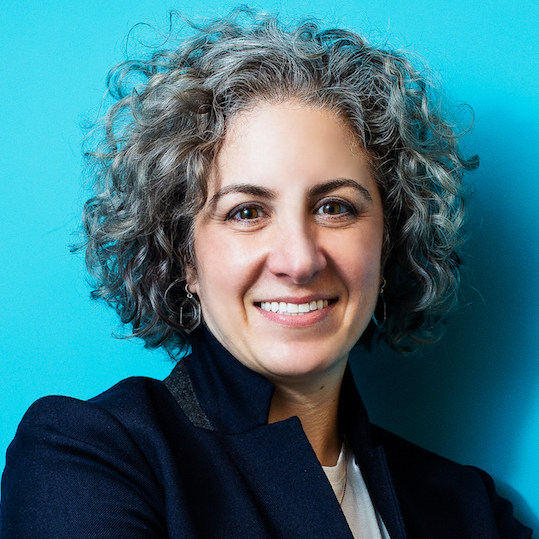
Intentional Success: How Beth Messich Took Control of Her Business
With Beth Messich
Listen and subscribe
In this episode
Beth Messich set up an LLC during the pandemic to do a bit of coaching on the side, and then one January she sat down at her desk and decided she wasn't starting a job search, she was starting a company. This is the conversation about what changed once she stopped seeing what happens. Her positioning took a year to write and runs twenty words. And her account of taking ten days in Thailand without anything falling over is the best thing I've heard anybody say about boundaries.
What you'll take away
- Decide, and then be all in. Beth gave herself a year. Half a job search and half a business was never going to work, and she'd worked that out before she started.
- "I can do anything" lands as "I can't do anything especially well." She's a utility player by training, and saying so to the market was quietly costing her.
- Her marker for an ideal client isn't an industry. It's people who want to do the work. One of her best clients is a global plumbing company.
- A consultant is often the cheaper option. A full-time hire costs salary plus benefits plus bonus, and they probably can't get your level of experience for that money anyway.
- Nobody sets your boundaries except you. She built the project plan so everything landed before she flew, told the client exactly what to expect, and made them define what counted as an emergency.
In this conversation
The full transcript, in sections. Open any one to read it.
"If I'm doing this, I'm all in"
0:02
There was an inflection point. There was a point, like, when I sat down at my desk and I literally, like, I was having a conversation with myself, like, Am I doing this? Am I doing this? Because if I'm doing it, I'm all in, and so if I'm all in, like, I'm not just gonna see what happens.
The business you didn't mean to start
0:20
Welcome to the smart gets paid podcast with me. Leah Neaderthal, I help women land higher paying clients in their independent consulting businesses, but I've never been a salesperson. My background is in corporate marketing, and when I started my first consulting business, I learned pretty quickly that it's about 1000 times harder to sell your own stuff than it is to sell someone else's. So I taught myself how to do it, and I created the sales approach that I now share with my clients so they can feel more comfortable in the sales process, get more of the right clients and get paid way more for every client contract. So whether your client contracts are $5,000 $100,000 or more, if you want to work with more of the clients you love, do more of the work you love and get paid more than you ever thought you could, then you're in the right place. Let's do it together. Thanks for tuning in, and don't forget to rate, review and share. Hey there, Leah here, and thanks for tuning in. I hope that wherever you're listening to this, wherever you are right now, you're having a great week, making some good progress on your business, and taking some time for you, so you might be able to hear that I have a little cold right now, just your standard sort of winter cough and cold. You know, it's sort of that time of year, but I think I'm on the tail end of it, so yay. And actually, I have to tell you, I waited as long as I possibly could to record this episode because I was really hoping that this was going to clear up, but alas, my cold is still here and I still sound like this. So we're doing this anyway, because this episode is really just too important to put off any further. And this is such an important conversation because it really speaks to what I'm hearing a lot recently in my conversations with women consultants, and really the situation that they're finding themselves in, and that is the women I'm talking to, when they started working with clients, they didn't actually go into it wanting to start a business like maybe they thought it would be something to do on the side, to just earn a bit of money on top of their Corporate Income. Or maybe they thought it would be temporary, like between jobs, or if they got laid off. I mean, maybe this is your situation too. Maybe you didn't go into this thinking, I'm going to start a business. You just wanted to work with some clients, and so because of that, they've spent the last few years just sort of going along in their business, but not treating it like a business just sort of going along, taking the work that comes their way, and sort of seeing what happens. But then after a few years, they realize, like, okay, I guess I do have a business here. One of the women I spoke to sort of put it this way, she goes. I didn't go into it wanting to start a business. And in terms of how it feels, it feels like I've been sort of living in a tent, but now it's like, oh, wait, I live here now. But the problem is, it's still a tent, and it sort of affects my confidence and how I show up in the business. And so in that situation, you know, after a time, one of two things tends to happen. They either think, I guess I guess I need to treat it like a business, or they think time to treat it like a business. And the second option, time to treat it like a business, is what the woman I'm talking to today decided, and it really transformed her business. So today I'm talking to Beth. Message. Beth is a leadership coach and consultant who helps companies develop an internal pipeline of capable leaders at every level, which allows the company she works with to grow the careers of their leaders and help them move the business forward. And when I started working with Beth, she was at a similar moment to the one I described earlier. She had started doing some consulting on the side, you know, during covid Because she had just gotten some people reaching out to her, who knew she was, you know, good at what she did, and she just sort of started saying yes. And for a little while she did that just to sort of see what happened. But after a few years, she decided to stop just seeing what happens and start being intentional about running her business. And that journey is what she's going to share with you here. So in my conversation with Beth, you'll hear when she decided to build her business with intention and why she decided that. You'll hear how she went from being a quote, unquote utility player to being seen as a specialist and an expert. You're going to hear what she decided to focus on, and also what she decided not to focus on, and how she was able to take soft skills, quote, unquote, soft skills, and position them as a critical must have for her clients. And finally, you're going to hear how she got clear on her value and her pricing, and how she's been able to take vacations and turn off work, which I have to tell you, is a master class in boundaries. I'm so excited for you to hear Beth's story, because I wanted you to. See what happens when you start to be intentional about your business. So just as a quick heads up, when Beth and I recorded our conversation, I was sitting outside, and I remember it was like this beautiful day, kind of windy. So during our conversation, you're going to hear some birds. You might hear some wind in my microphone. You're not going crazy. It's just the recording. So take a listen to my conversation with Beth message, and at the end, I'll come back and share a lesson that you can apply to your business, and then hopefully someday soon, you'll partner with us to help you build your consulting business, and you'll come back on the podcast and share your story. Enjoy, Beth, I'm so happy to see you. Thanks for being here. Absolutely.
I'm excited to I'm excited to have the conversation.
So Beth, let's start by, why don't you tell everybody who you are and what you do?
Yeah. So my name is Beth message. My business is Beth message, coaching and consulting. And I help companies develop an internal pipeline of highly capable leaders at every level to both grow careers and deliver business results. And I do that through executive coaching that's really focused on leadership and career. And then I have a consulting side of the business that is learning and development and Talent Management coaching that's or a consulting, excuse me, that's everything from I can create your learning strategies, build out your leadership programs, do org design, or create your entire performance management system.
I love it. I love how you describe that. They're so tight and, like, clear and crisp. You must have been working on this for some time.
Yes, yeah, those, I literally counted it. Those 20 words took me a year. So, so there we are. Yeah.
So if you're listening to this and you've ever thought to yourself, God, why is this taking so long to, like, come up with my messaging or, you know how I describe myself, 2020 words in a year.
That's about how long it takes. Uh huh, yeah, for sure. Well, so before
we dive in, I just want to tell everybody. So I, as I said to Beth earlier, and as you can see on the Zoom, so I'm sitting outside, and which is lovely, and the birds here, they're living their best life. And so if you hear birds in the background, they just want to say hi and hope you enjoy. So Beth, let's take us back about a year. What was going on in your business or in your world, sort of when we Yeah at each other, like, you reach out for a reason, like, what? What was that reason? Yeah.
An LLC on the side, and then the second of January
7:25
So this is interesting. I was thinking about this. So just a little bit of background. So I have close to 20 years in learning and development, talent management in corporate America, in large global companies, largely in retail, hospitality, and then also in some startups. And I had gotten my coaching certification in 2020, totally entire intending to stay inside corporate, use it there. But I was like, maybe I'll do some coaching on the side. So during the pandemic, I set up an LLC, you know, just to do some coaching on the side. Yeah. And as you do, as one does, right? And during the pandemic, I, as we all can remember, it's sort of the Wild West. So I was, I left a company, I was doing a job search, and it was going well, and they're like, Hey, we have to put this on hold. And I, out of nowhere, said to them, totally understand that seems like you have some work to do. Would you consider bringing me on as a consultant? And they were like, oh yes. And I was like, cool, let me figure out how to figure out a proposal, right, right? By the time, you know, over the course of a couple of years, I was doing coaching, I was doing consulting, I had this LLC, I was still working internally in a corporate in a corporate environment, and that wrapped up in November of 2022, and I took I was like, let me just, I'll start a job search in the new year, not over the holidays. I was coaching some people, someone I used to work with, reached out, had no idea what was going on with me, and said, Hey, is there any chance you're free for some consulting? It was like, you know, funnily enough, I am, and I was just sort of ruminating on things throughout the holidays. And I literally sat down at my desk, the desk I'm at now on January 2, 2023 and I was like, not going to start a job search. I'm actually going to start a company. And I mean, when I tell you out of the blue, like I surprised myself. And so the funny thing is, though the last three years were backing me into that decision. And so I actually was making a significant amount of money in a coaching and consulting business that just sort of wasn't really fully fleshed out. And so for the first few months of that year, I was like, Okay, let me figure out what a business plan is. And it was around April of 2023, where I was like, Okay, I know how to do the stuff I do. I know how to coach. I know how to build learning programs. I don't know how to run a business. So maybe. Find a business coach. And I think there's just sometimes like the universe, however you interpret, the universe, is looking out for you. And at that point, you reached out to me on LinkedIn, and I will tell you, for anyone who's a consultant, the minute you tell LinkedIn you're a consultant, you get a lot of messages. You get so much junk. Oh, my God, I can get you 30 leads in a week, and I can, here's my ABC sales system, and I immediately delete it all. And I didn't delete your message, and I have to go back. I don't know what it said, but I was like, Oh, this feels this feels different. And so you and I just started a conversation. You suggested I listen to your podcast? So you were with me on my morning walks. I was hearing you talk, and I was really at a point where I was like, Okay, well, I'm gonna do this, and I want both coaching, I want some training, and I would love to actually talk to other people who do this and have a community. And that's kind of how this all came together for me.
Yeah, so Well, thank you for not deleting my message. And also, like, the range of things that I have been pitched on LinkedIn, everything from, like, I can get you 30 leads to, would you like me to build an app to just you have a lovely smile? Would you like to go on a date with some man from some other country? Like, it's weird, you know, and it's annoying, right? But I don't know even why I must have reached out to you. I mean, it's because I didn't pitch you, right? I just was like, I don't know,
and that was why I responded. I didn't feel like I was getting pitched and you weren't pitching me. Like, the reality was you weren't pitching me. You were looking to truly connect, yeah,
yeah, that's right. Well, so in that moment when you really fully committed to, you know, learning things, or getting the help, or what have you, was something not working, or you just had identified, like, Okay, this is a gap a little
bit of both, right? So when I So, I'm a learning and development professional, right? Like I learned, that's my business, and I love to learn, but the thing that I also know about myself is a couple of things. I learn best when it's something that I'm interested in and can actually apply. And I learn best from a variety of sources. So there are a ton of books out there that I could read, but I needed more than a than a book. And so what was working like? Sure, I had proposals, I had that I had written, I had contracts that I had written. I was using LinkedIn, and I'll sort of say that in air quotes, like, in the sense that I existed on there with, like, a hodgepodge of people that I had connected to over the last 20 years, right? But I didn't really understand strategically how to step back and think about all those components. You know, I'm a really organized person. I'm really great with process. I didn't know enough about running a business to create my process. And so what I was really looking for was learning an application at the same time and support while I was doing that. And the biggest piece was, how do I build a client pipeline, like I a business pipeline like, I am fortunate, I have a great network, and any of the consulting I had gotten was through some level of like, Hey, I know you. Would you be available, interested in doing this? But that's not a sustainable strategy, right?
I mean that pipeline pieces, as you know now. I mean such a big component to build, but it's, yeah, I mean, you can't run a business without it. But I want to talk a little bit about because I've been having some conversations recently with women who sort of accidentally found themselves running a business. Yeah, right. And there's, there are good things about that, and there are difficult things about that. Because, you know, in the moment when I'm talking to some of these women, I'm just thinking about some conversations more recently, like, it's they sort of cruise along, and it's like they because they never quite intended to start the business. They didn't quite intentionally run the business, and so how did you, yeah, make that shift.
Deciding to stop seeing what happens
14:05
Yeah, it's funny. You know, I think there are decisions over the course of my life that I look back on where I'm like, Oh, that was a smart decision. And I don't mean that to pat myself on the back. It was like, oh, luckily enough, I made a good decision there when I would say that kind of cruising along piece was what was happening up until January 2023, where it was like, Oh, I'm doing this on the side. Oh yeah, oh yeah. I can do some consulting for a while to bridge this gap, or whatever. But when I sat down that January, I was like, Okay, I'm going to do this as a business. And I made some decisions where I said, you know, and Everett, look, people make the right decisions for themselves in their lives. There are people who are like, part time in corporate, part time starting a business. I was like, I can't do that. I can't be part time in a job search and part time running a business, like, I'm either doing this or I'm not. And so my commitment was for a year, I'm running a business. And. And if, at the end of that year, it's not working for whatever reason, I'll go back to corporate America right. Like there, I always have the opportunity to do that, but I'm not going to be half in and I also really have this philosophy of, like, if I want people to hire me for my expertise, I need to hire experts to help me with things. So when I was building a website, people were like, oh, there are tons of templates out there that you can use. Yes, there are. I am not going to do that because I'm never building a website again. And if any, by the way, if anyone does that, great, Rock on. But I was like, I'm going to hire someone who, who does that, who's the expert? And I did, and I'm thrilled with the result, and she's amazing. And so for me, it was really like, Yeah, I kind of backed into this. But it's, it's also, it's like, one of those, you know, those rom coms or something where, like, you rewind the tape and you're like, oh, like, all of those things actually led me to exactly where I was, like, I set up an LLC without intending to really have a business, like, come on now, right? Come on. So I really found myself in this place where I'm like, Well, it seems like everything I've been doing has been leading me here, so I'm going to do this, and I'm literally changing my mindset to now I'm an entrepreneur, and that's how I describe myself to people, like I am an entrepreneur, and that was a huge piece of it for me.
Oh yeah, I can see how that would just change. So many, yeah, so many things. You know, the next steps from there, absolutely, yep. Well, so let's fast forward to now, and then let's talk about how, how we got to now. So bring us up to speed. What have been some of the results you've seen from making that decision and over this past year of learning? I mean, what's, what's changed
What a year changed
16:41
for the better? Yeah, a lot has changed for the better. So number one, I have a business that supports my life, right? So I'm, you know, and look, business changes like I still have to keep my pipeline going. But the reality is, I have not changed my lifestyle from when I was working full time in a corporate job. So I still take big I just came back from Thailand. I still travel is really important to me. I still take vacations. I still put money into savings. I still have a great retirement fund. If anything, I actually have a lot I have more time because I have a lot more control of my time, right So, and in order to do that, it's because I have a business where I've got a really nice mix. So when I when I started, I really remember, like, sitting down in the beginning and being like, okay, so like, do I need 10 clients? Like, do I need 100 like, I had no idea I do large scale projects, which would be, say, four months to a year. I do small projects, which are one to three months, and then on coaching, I do three month engagements, six month engagements and beyond, right? And so I now have a good sense of, Well, if, if I do five large projects, that's the entire year, if I don't do anything else, right? If I do two of those or three, right? So I think I just have a better sense of what I need to achieve my business results, and I work on building my network and developing relationships, which is a long process like you. You always say like the sales process is, what three to 18 months, having a really clear understanding of that and being able to understand sort of the mechanisms of here's what I need in my pipeline over time. Here's how long it takes for a sales process. How many people do I need to continue to bring in my network and really build relationships? I don't care if I add a million people to LinkedIn, I want to add people who are, are my ideal client, who I can get to know and build a relationship with set because the reality is, they're not going to probably hire me tomorrow, but they may hire me in nine months or 12 months or 18 months. And so really just understanding, I think one of the biggest things, is understanding that that whole ecosystem and philosophy is, like, worlds away from So, is it 10 clients or, like, 1000 like, it's a very, very different place to be.
Yeah, well, first of all, I mean, the fact that you are where you are, having put these things in place, and, you know, built this understanding and these skills and strategies. I mean, that's, that's fantastic, and, you know you're only going to go up from there. And yeah, I think this. I think there's a real misunderstanding about what it takes to get a client. Yes, right, and because you've hired consultants, I have right on the corporate side, so have I right? But I had no idea what went on on the other side of the table. And I really underestimated, like, what it takes, and even as the client, I underestimated how my world impacts the consultant, right, like, and so I don't know just when you think about like, what it takes and the understanding of the ecosystem. System. I think I wish I could just, like, give that to everybody, right? I think that's sort of what I'm trying to do here. But, like, yeah, I don't know. How do you think about that?
Painkiller, not vitamin, in a field people call soft
20:07
Now, I think about it as so, you know, I'm someone who likes to think about frameworks, and so that's sort of the framework that I think about. So the reality is, I'm not going to get every, like, every proposal that I put out there is not going to get approved. Every discovery call that I make is not going to work out right. And I think in the beginning it can be really scary. It can be like, Oh my god, okay, oh my god. I guess someone's going to have a conversation with me, and I can maybe get a project out of this. And it can be really tempting to try to, like, contort ourselves into whatever they need. And you can really end up in a position where you're like, I'm not doing work I want to do, or I'm not getting paid what I want to get paid. And I think I'm really I'm grateful that kind of the timing worked when it did, because, yeah, I've been running a business on the side, but when I really had to make this, decided to make this my full time business. I think one of the things that we talk about a lot, that you talk about a lot, really comes down to clarity, right? So things like, you know, in the beginning the painkiller statement, like, don't be a vitamin, be a painkiller. When you said that, I was like, Oh my God, yes, right, right? Because, yeah, vitamins are great. We, you know, I take them. Like, of course, we all want to do the things we're supposed to do when push comes to shove and budgets get cut, because I worked in internally in corporate, right? Like, when budget gets, budgets get cut, and you can't do all the side projects, and you're going to hire someone to solve the thing that is causing the pain. So how do I think about the work that I do as being a painkiller and not a vitamin? And by the way, I sit in learning and development and Talent Management and coaching, which, to a lot of people, is like, Oh, the fluffy side of HR, the stuff where you like, hug people and make them feel good, and I'm like, no, no, no, no, no. All of those things are enablers of having a workforce that you can grow internally so you're not paying to continually bring someone in because of turnover, and can actually be a huge lever for your business. And yes, let's do it in a way that's humane and make people feel great and they get robust careers. But let, let's make no mistake about this, this is actually a strategic decision for you to to have a healthy business, and being able to position in that way has been hugely helpful for me.
Yeah, I love that you said that, because I think that especially when you know women come from the phrase I hate the most is soft
skills. Oh, my God, it's I mean, I
have a lot of, okay, let's be fully, really honest. There are a lot of phrases that like, grind my gears, and this is one of them, but it's about the top 10 soft skills, because I think it pre sells any listener that this is not important. And so sometimes when I talk to women, and they're like, Well, you know, how do I get somebody to buy this? This is, like, soft skills, or, you know, some equivalent of that phrase, I'm like, you, you the first sale is to yourself. So first of all, stop positioning it to yourself that this is optional, yes. And then let's find the ways, or find the way to communicate that this is strategic, absolutely. Yeah. So yeah, I think what you're talking about is like, not just how we communicate it to the client, right, which is, of course, is hugely important, but also how we communicate it to ourselves,
absolutely, absolutely, well.
So between where you started and where you are, what would you say have been some of the biggest game changers for you? I mean, you mentioned, you know, painkiller, right? What have been some of the other things that have made the biggest difference?
Why "I can do anything" works against you
23:46
Yeah, I think two, two other things, the first one. And this first one is sort of like a mashup of two things, but I'm going to call it one thing, the idea of ideal client and niching down. And by the way, I am, I say this, like that stuff is out there in the world. Like, figure out your ideal client niche down, and you're like, Okay,
what is that? Right? Like, what am I? I googled it, but what am I supposed to do with it?
Now, right? You know, I think one of the things that you talk about, that I really appreciate is, I think there's this idea for consultants, and I think a lot of times for women of like, well, I don't want to say that. I can't, I mean, I can. I can do it. I can. Do it right?
Like, I don't. You guys, I wish you had seen also this, like the gesturing and, like the posture, because that is exactly how it comes out. Like, it's, like, I can do it. You guys can probably picture it in your heads as we hear it, yeah,
it's almost apologetic, right? Like it's, yes, I can do it, like, Absolutely, right? This, this very accommodating thing that isn't actually helpful, right? I think a lot of the times in coaching sessions and with other members of the academy, you know, people would ask questions. I'm sure I was one of them, and said, like, Yeah, but what if I niche down to narrow? And the reality is, and this is funny, like. We have to be able to take our own advice as well. I coach people in career transition all the time, and I always say, like, if you are not clear about what you want to do next, no company is going to figure that out for you, right? So you have to be really clear on the job that you want, and then go for that. And people will be like, Yeah, but what if? What if I then don't go for another job. I'm like, do you want the other job? And they're like, no, like, then don't worry about it, right? And it's kind of the same thing, yeah. And for me, part of the way I add value is I am a utility player. I can do a lot of things, right? Like I part of the way I add value inside an organization is I can build your learning program, and then I can go talk to your executives and coach them, and I can go, blah, blah, blah. I don't want to do all the things that I can. And I think when you say to the world, I can do anything, what it comes out as I can't really do anything.
Well, oh my gosh, I'm so glad you said that. I read some version of that that just says I'm gonna, I'm sure I'm gonna butcher it. But it's like it. Just when you say I could do everything, or I could do anything, you're basically saying you are mediocre at many.
Yes, yes, absolutely.
So once you sort of came to that, or, or you came to that in the HR space, very you know that's part of your philosophy, but sort of in this, in the business space. What does that say to you? What do you do next?
Her real marker: people who want to do the work
26:23
Well, part of it was also then figuring out the ideal client. And a lot of times, like, if you read articles about ideal client, there are tips like, think about your ideal industries. Think about your you know, ideal size companies. Not bad advice. But the reality is, it's not nuanced enough. And so whenever I would do those exercises, I'd get so far and be like, I mean, whatever, right, get frustrated and walk away. And I remember having a coaching conversation with you where you were kind of, you were pushing me, and you were kind of like, but okay, yeah, those are the industries you worked at, but like, what about them? What about that organization, what about that kind of industry, and what it came down to? And this may sound a little like amorphous, but I'm like, I want to work with people who want to do the work, which kind of sounds like, Duh, but the reality is there, you know, there are companies that will be like, yep, we need to do a learning program, because we have to check the box for our people. So come on in and do a session. And you know, you'll look at it and be like, well, I can come in and do a session on whatever you want. Your culture is going to just negate it entirely, and it's actually not going to develop your leaders. So if that's what you're looking for, I'm not your gal. Go buy something off the shelf, right? And I obviously would say this differently to a client, a little more professionally, but I'm really clear. Like, I don't care how much money you have, I don't want to work for you, because, number one, it's not going to help your people. You will check a box, which is meaningless. But also then I'm not going to be able to speak to that as a success, right? It won't feel like a success. So, like,
I can cash the check, but, but I'm not in it to cash checks. I'm in it to solve problems, yes. So I do
a lot of work with retailers and hospitality and startups. One of my best clients is also a global plumbing company who wants to do the work, right?
Yeah. I mean, a way to niche down, or, you know, find your ideal clients, find really, you know what it is, it's it's not even like niching down or finding your ideal clients and just finding the best clients for you, the and the best clients for you are the clients where you can be the most successful with what you are bringing to them, and they can be the most successful with, you know, solving the problem and and finding those, what we call the markers, are really, really important, because not all say, not all tech companies will have the same problem. But if you, if you really focus on the problem, you can find people who want to solve that problem in any number of industries. Yes, yes, for sure. So yeah, I think, I think sort of seeing it turning the prism just a little bit, and seeing it that way, it sounds like it really, you know, did something for you,
Pricing on twenty years, not on an hour
29:08
absolutely, absolutely. And then the other thing is pricing and and value based pricing, because one of the scariest things, I think, as a consultant, is being like, I have to put a price on something. And I will say it does help that I worked internally, and I've hired consultants, and sometimes we were hiring, like, the big consulting firms, and the prices on those are like, holy, holy cow. Like, those are like, enormous, priceless, astronomical, astronomical. So this idea of like, will a company. I'm like, I'm really clear that companies will pay for this stuff. So, like, I didn't have that that hanging over me. But there is something around, you know, value based pricing, the idea that you like, I am giving you a price for whatever I'm delivering that is based on I am the person delivering it. There are other people. Out there who coach, there are other people out there who do the work that I do. I bring 20 plus years of experience across a variety of industries, and I deliver those things in my particular way, and that is part of the value that I deliver. And so that isn't an hourly rate. You know, you're not hiring, you're not hiring me to shelf books or serve coffee, and there's nothing like I mean, no disrespect for that. This isn't transactional. The value that I deliver in trade. If I train 20 of your leaders, and those leaders have longer careers with your organization, that value is enormous. Every time they have a great feedback conversation, because they've worked with me and Don't devalue someone on their team and continue to retain people. That's part of the value. Every time a leader gets coaching and then actually is able to scale their leadership up from being a leader of people to a leader of teams. That's the value that I deliver, and that's not an hourly rate. And being able to get clear on that, myself, articulate it and then feel really comfortable putting the price on it is huge. And one of the things that you I can't remember if I heard it on the podcast. I've heard you say it multiple times. I can't remember where I first heard it, but you, you said something to the effect of, like, you can charge whatever you want and and it wasn't like a so put it as high as you can't. But, like,
No, it's not about that. It's not about, like, guessing as high how high it can go.
Yeah, and, and, you know, I think the other, the other companion to that, is if someone doesn't want to pay your price, that doesn't mean your price is wrong. It means it's not the right price for them in this moment, for whatever reason, right?
It doesn't mean that you did something wrong. I think that we were so, you know, high achievers, we blame ourselves, right or we did something wrong. And so yeah, if they don't say yes, it's not because you did something wrong, it's it's because you did something right for you and for the business and everybody. This is what I always, always say. You probably heard me say this many times, right? My little soapbox. It's like every client has the right to go with a cheaper provider that's not as good as you, and you have the right to work with clients who can pay your prices, and you should not have to, you know, bend over backwards or sort of twist yourself to make it work for them.
Yeah, right. Well, and the the other side of that is I can choose to charge less in some cases, like so I do coach executives. I also really love coaching people earlier in their careers. I firmly believe that people got coaching earlier in their careers, we would have less things to fix later from a leadership perspective. And so yeah, honestly, if someone comes to me as like a new manager who's self pay, like their company is not paying, I give them a different price. If I believe they're fully into it and feel it like, that's how I balance it out, and that's my decision to make.
Absolutely, that's your decision to make, and you're making it with intention. Absolutely, there's something I want to touch on, because I coming from HR, I would love to hear your perspective on this. Because sometimes what I'll hear from you know, consultants, even from women in the program, when they first start to do value based pricing, they sort of think about the price in terms of in comparison to what if it was a full time hire, they that sort of anchors their their price, or what have you. This is like a quarter of a full time hire, a half or seems to be limiting to them. And like, I have 1000 things to say, but I would love to hear how you sort of reconcile that, especially since full time hires were your world.
Why hiring you can be the cheaper choice
33:39
Yeah, what I will say is companies have a variety of ways that they can hire people. They can hire full time, they can hire part time, they can hire contractors, right? And there are strategic choices that they make in all of those decisions. When you hire someone full time, you're giving them a salary, you are giving them benefits, you are giving them perks. They have bonus. So whatever that price is, there's like an enormous, whole other bigger price that goes along with that. So like, let's say I'm making this up. Let's say if you hired this person full time, a quarter of their salary would be $50,000 I'm just picking a number. But the reality is, what they're probably actually earning is $70,000 for a quarter, because they're also getting bonus and all that. So the company's paying a ton more. If you come in as a consultant and are, like, basing your prices only on, well, a full time hire would be, you know, X amount, whatever. Okay, you're not figuring in all of the other things. You are actually a if you charge the exact same amount, you're actually a savings to the company, right? So you could look at it that way. You could also say, I as a they might be bringing me in as a consultant because they can't afford a full time hire at. Skill set that I am so they can maybe afford to bring in someone with three to five years experience, full time I come in with 20 years of experience. So that person, if they brought them in, you know their their salary for what that four months, whatever would be, $50,000 my experience for the project that will go four months is more significant than that, right? So companies make strategic decisions, make sure your price that you're doing your pricing strategically, because a lot of times bringing a consultant in some way, shape or form, is actually saving the company.
Yeah, I love that perspective and and, you know, and I look at it from the value positioning as well. You know, I was definitely on a soapbox in a recent call about this, because yes, they could hire somebody full time. I think that. I think the objection, or the fear, was that, why would they pay my price when they could hire somebody full time, they probably couldn't
hire someone at your experience level full time for what you're going to charge them.
Probably couldn't do it right. And there are other benefits. I mean, what is the what is the benefit to a company or a team, or what have you, to have somebody with a lot of experience fully focused on this? Yes, not dealing with 300 other fire drills, not sitting in eight hours of other meetings. You know what I'm saying? Like, there are a lot of other things we have to look around. We can't just look at the price. Absolutely, absolutely. No, yeah, no, I love that. I love that. Is there anything else that you that made a difference?
Ten days in Thailand, and how she set it up
36:35
Yeah, you know, one of the other things is, at the start, you don't talk about the business, you don't talk about the price, you talk about what do you want your life to look like? And I think that is one of the biggest reasons. Certainly, I went into consulting, and I think a lot of people do like to have your own business. There's just much more control around your life. And I know consultants who are working 24/7, and, you know, and there's, I don't judge it, there's a whole host of things that go into that, but I'll give you an example. I was having a couple weekends ago. I had a friend, her mom was in town, and so we were having brunch, and her mom started consulting about four years ago, kind of like in the PR space. And I recently went on vacation. I took a 10 day vacation to Thailand, and I was, I don't work on vacation. I am, I will check email once a day. I don't work on vacation. And she follows me on Instagram, so she saw the pictures, and she was like, your vacation was amazing. How do you how do you do that? How do you, like, take a vacation and have your clients not like, freak out. And before I could even answer, my friend said, Beth is really good at boundaries. And I said, that's really what it is. And so what I did is I was doing a big project for a client. I was gone the first half of May. What we were delivering was really, like it was going to be the last two weeks of May to deliver into June. Like that was sort of a critical time period. And so when I built the project plan, I built it that everything I needed to deliver was done by the end of April. They knew what they needed to do over those two weeks. I told them how they like I'm going to be in an 11 hour time difference. So if you would like to reach out to me, I will check my email, and you can text me if it's an emergency, but know there's going to be a time lag there, by the way I do learning and development. So you're going to have to define emergency. For me, someone needs to learn something that's just all cool down. But they knew exactly what to expect. I came back. We did the last two weeks. It's been launched, and it's doing well. And so I don't, I don't say that from the perspective of like, so I've got it all figured out. Follow me to like, hear more great tips. I say it because we, I think a lot of times, if we come from the perspective and in a court, and I think this is a corporate, a very much a corporate mindset of like, I am getting pulled by the tides of this company because they've hired me. And that was definitely something I had to think through. You were the owner of your business. You set the boundaries. You set the time. Like this is about your life. No one is going to set your boundaries but you or set them where you want them to be. No one is going to be as focused on your life, but you so make that your responsibility to do that absolutely.
And I think, I think it also goes back to something you were saying earlier, like nobody's gonna do it for you. Clients will not set boundaries for you, right? Clients are gonna client, yep, right? And you have to set your boundaries and run your business with intention. I mean, you even planned this, this whole project with intention, because you knew to be, you know, completed and successful by this date. Yeah, nobody's gonna do it for you and and you've also heard me say a number of times, like, we teach the client how to treat us. Once you set the boundaries, if you break them, you are teaching them. I mean the learning moment. It, right? You are teaching them that that's okay, yeah. And so I think you're what you just described is a master class in knowing how you want things to be for you and setting boundaries around that
absolutely. Yeah, yeah.
Well, so what would you say to somebody who's in the position that you were, you know, back when you were sitting at your desk saying, Okay, this is now a thing. I'm going to commit to this.
Yeah, I think, look, we all have to make our decisions based on our own, the personal dynamics in our lives, our own personal financial situation. So I would say, try to be as objective and clear about assessing the current state as you can like, look, I don't I'm single. There is no second income here. I have two cats. They are not internet celebr cats with their own income streams, like, I pay for everything, so if I'm not making money, like, my rent doesn't get paid. So the stakes are high for me, believe me, but I decided I had this conversation with myself where I'm like, if I'm going to do this, I'm not going to do this scared. I'm going to do this as clear eyed as I can. And so what that means is I'm deciding on January 2 I'm starting I'm going to, like, do this business full time. Well, I'm not going to be making, like, my current income by January 5. So like, what does that mean? And I got really clear on here's the amount of my savings that I am comfortable using as I ramp up. I really need to be ramping up by mid year. Here's what that looks like. And, you know, look, we have to flex. Like, we can't, you know, there's only so much manifesting we can do. But I got really clear on all that, because I think if you're not clear and whatever, by the way, that's not what I'm not saying. That's what's going to work for everyone. But once you're clear on kind of what that is, then you can more accurately assess how things are going. And the other thing I said to myself is, I'm going to spend some money like, I'm not going to come at this from a scarcity, like I have to pinch every penny, like I am going to hire experts like the like the person who did my website, like working with the academy, like someone who's doing some systems work for me because my time is more valuable than the like my dedicating my time to doing the work or building my client pipeline actually is going to be more valuable than trying to teach myself how to use a website template or read all the books on pipeline, or trying to figure out how to connect to my systems, right? Like, whatever I'm paying anybody else is actually an investment. And so I think getting really clear on like, what is your current state, and where are you willing to invest then you're making decisions from an educated standpoint and not an emotional one. Could you like, I had emotional moments where I was like, this is feeling real quiet right now? Like, was this a good idea? I don't need to panic because I'm having two quiet weeks. I'm fine, right?
Yeah, yeah, what you're describing sounds like just a lot of foresight and, like, you know, planning and all of that. And I think that some people, especially if you accidentally find yourself in a business, I mean, may not have the, you know, the wherewithal, or the or the, I don't know, even forethought to to plan like that. Yeah, are you naturally a a planning person, or was this something that you just, I mean, how did you sit down and do this? Yeah?
I mean, I am. I am a planner. Like, I'm the person who's like, what's happening in August, because I got to get my weekends booked, right? I am that person. But also there wasn't. There was an inflection point. There was a point, like, when I sat down at my desk and it was I literally, like I was having a conversation with myself, like, Am I doing this? Like, am I doing this? Because if I'm doing it, I'm all in, and so if I'm all in, like, I'm not just gonna see what happens. Like when I was coaching on the side, or doing some consulting. I had a full time job. I was in a good place. Like, I could see what happened. I could see how that evolved. If this is going to be my 100% of my income. Yes, things are going to evolve, but like, I need to have a framework or a plan that they're evolving to so I can actually accurately assess, okay, did this evolve in the right direction, or do I need to pull back, or where do I need to put my time? A lot of it comes down to, you know, as I talk to other, you know, as we'd have a conversations even in the academy, like there are a million things you can be doing as a business owner, and it feels like, sometimes it feels like you should be doing all of them at the same time. Like, I should be building my network and redoing my LinkedIn page and creating an offer and blah, blah, blah, like, you can't do it all at the same time. And so if I have a sense, like, being able to step back and say, like, and by the way, the plan doesn't need to be beautiful. The plan was, like, I've got a really pretty notebook here. Like. My Plan, like, literally, my financial plan for the first year was like, so maybe I'll try to make my salary like, maybe that's the plan. And actually, wait, I probably am not going to have like, a full year of that. So maybe I'll try to make this percentage of my salary like, that was the plan.
Yeah, not scientific, but no, no,
but clear and, and the other thing I will say about this that I did not realize is one of the biggest, like, one of the most important things and biggest like skills to build as you're building your business is the practice of self reflection, of actually, like you're not going to find your ideal client by reading something else, seeing what someone else did. So the practice of self reflection, I think for an entrepreneur is hugely important, because no one else is making those decisions. You are,
yeah, I love that. It just and I think what's implied in that is trusting yourself
absolutely, absolutely, yeah, for sure.
There's something that you said earlier. I just want to go back to you're like, well, business changes, and I still need to fill my pipeline. And you said it almost like it was a little bit of an excuse, you know, like, I'm not perfect. I'm still, you know. And I wanted to just touch on that, because it's, you know, one of the things we talk about is, like, filling your pipeline happens all the time, yeah, and, and it never, doesn't happen. And so we're, you know, shouldn't stop. And so the pipeline always needs to be filled. I think there's a lot, there's something out there that, of course, we wish it was like you were set for life, you know, by posting, if you post on LinkedIn, but if you're, if you are filling your pipeline, it's not that you did something wrong,
absolutely not. And I think the other piece that I really didn't understand until I started honestly working with you, is building my pipeline. Like, like, I don't want to be salesy, like, I just like, it makes my shoulders come up to my ears. It feels icky. And I don't mean that selling, you know, selling my services is bad, but that salesy like, networking to sell, filling my pipeline is really filling my it's really about relationship building, and relationship building doesn't happen. Because this is why the people who do the like, Hi, I'm so and so from wherever I can get you 30 leads. You know, I'm like, you know nothing about me. The only interaction we've had is you trying to sell me something. Thank you, no. As opposed to building a network, starting to get to know that network, being helpful, reaching out if they, if I feel like they can be helpful to me, like, genuinely bill. The reason the people who you know my colleague, former colleagues, or whomever refer me is because I've known them over time. They know me. They know how I work. They know what my work looks like. So feeling like working on the pipeline is a constant thing, because you have to build relationships over time, right,
right, absolutely. And that's where, as a business owner, that's where you can and should be focusing,
yeah, right, yeah.
Beth, where can people find you? Yeah.
So you can find me on LinkedIn, under Beth message. You can also go to my website, bethmessage.com and you can reach me any other of those places.
Awesome. Beth, thanks so much for being here.
Yeah, thank you. It's so funny, like I think about on my morning walks listening to your podcast. This is, this is real full circle moment for me. So thank you.
My take: luggage, back seat, passenger, or driver
48:33
Totally, I'm so glad you came back to share your journey. Yeah. All right, I loved that conversation with Beth message, and if Beth said anything that spoke to you, please reach out to her on LinkedIn and let her know. So we talked about what can happen when you start to be more intentional about your business. And I think this conversation is so important right now, because, listen, it's the end of the year. We're coming up on a new year, and I think the question many of us are asking is, how did I show up in my business last year? And how do I want to show up this year? And so I want to offer a way to think about this that might help you in your business. So in the academy, when we ask this question, we ask, Who were you in your business? Like, if your business is a car, who were you? Where were you sitting? And there are four answers. I'm going to go through them here. So were you luggage? You're sort of going along for the ride. You're not taking initiative to move things forward, and you may actually be carrying baggage or adding weight that slows things down. Were you in the back seat? You were maybe doing some things, maybe, maybe kind of like a backseat driver. You have a lot of opinions about how things should be, or maybe you're sort of complaining about where you are, but you're still letting others drive. Were you the passenger? You have a vision of your destination, and you're contributing to the journey, but you're not actively steering. The business, you sort of relying on someone else, you know, your clients, maybe to get you where you want to go. Or finally, were you the driver you are setting the course, consistently showing up, navigating challenges, closing the gaps that are keeping you from moving forward, and taking proactive actions towards your goals. So those were the four. Were you luggage in the backseat, the passenger or the driver? And this is a really helpful way to check in with yourself, you know. And so as we roll from one year to another, it's a nice time to really, truly ask this of yourself and really be honest about which one were you in your business? Were you the luggage? Were you in the back seat? Were you the passenger, or were you the driver? But I mean, here's the truth, this type of checking in with yourself doesn't have to happen just once a year. You can check in with yourself on this at any time. And in fact, I mean, if you're waiting for some future date, some sort of, you know, my diet starts next month, sort of thing, you could be actually making progress right now, which is why, in the academy, our members aren't just asking this question at the end of the year. We ask it at the beginning of every month. So at the beginning of every month, we get together and the members look at, you know, what they accomplished last month, where things are in their business, and then from that, they choose the one or two strategies to work on this month, so that instead of looking at a laundry list of like, all the things they need to do in the program, they know the one or two things they need to work on at any time, and they can focus. But part of that exercise is asking, How did you show up last month and how will you show up this month? And when you do that regularly, you can always course correct. You can always bring yourself into the driver's seat in your business. Because what I want you to take away from this is you always have the ability to be the driver in your business, and the driver is the one who decides where you're going and the one who gets you there. And that shouldn't be your clients, that shouldn't be anybody else, that should be you, and that can be you when you decide to be intentional about your business. Happy New Year. You. Transcribed by https://otter.ai
Two ways I can help you
When you're ready to break through to the next revenue level in your consulting business, here are two ways I can help you.
1Join The Academy
For women consultants who've been in business 2+ years and are making $120k+. Build the two systems every consulting business needs to get more of the right clients, get paid more, and build a sustainable business:
- A marketing system to bring the right clients to you and fill your pipeline
- A sales system to help clients say yes and get you paid more
If you're ready to make your business and revenue more stable, secure, and sustainable, visit the Academy page to learn more and apply.
2Get Roadmap to Clients
Map out a simple sales process for your consulting business in less than an hour. Take potential clients smoothly from first contact to a signed proposal, so you can stop reinventing the wheel with every opportunity.
Get the free video course.